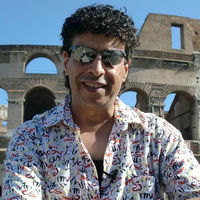
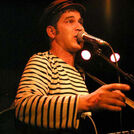
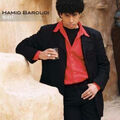
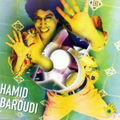
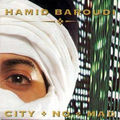
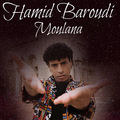
Born on February 20, 1960 in Tiaret, Algeria, Hamid Baroudi's childhood was immersed in traditional local music. From the age of 13, he took part in local groups such as Les Émirs and Triangle, and became accustomed to the demands of composition. After performing in high-school shows, including covers of Santana and The Beatles, he moved to France and then Germany, where he studied film. However, it was music that took precedence over the 7th art, with the founding of a band in 1981: Dissidenten. The group, in which Baroudi played solo, opened the door to international tours, including a date in New York's Central Park. With the group's demise in 1990, Hamid Baroudi decided to go solo. His new adventure began with a hit single, "Caravane to Bagdad" (1990), where his music blends ethno-pop, electronic sounds and traditional music. After staying in the European charts for twelve weeks, this success gave him the opportunity to set up his own label, Hoggar Music, and maintain his aesthetic independence. After a cassette, Caravan II Baghdad, released in 1990, followed by City No Mad, a first official album presented in 1994, Hamid Baroudi returned to the forefront with Five (1997), an album with strong multicultural accents sung in five languages. As he opened up to new aesthetics, including rap on the track "Tell Me", he collaborated with Japanese electronic artist DJ Krush and opened the doors to the Asian market. His album Sidi, released in 2002, enjoyed similar success, further establishing Baroudi as a major artist and representative of North African culture. A more discreet songwriter from then on, he took part in numerous concerts around the globe, performing his hits "Streets of Algiers" and "Alash".