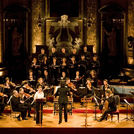
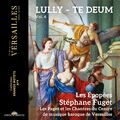
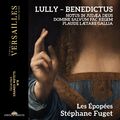
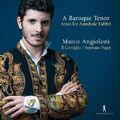
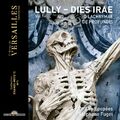
Harpsichordist, organist, pianist and conductor Stéphane Fuget is best known for founding the baroque music ensemble Les Épopées in 2018. Trained at the Conservatoire National Supérieur de Musique de Paris, he won first prizes in harpsichord and accompaniment, before graduating from the Royal Conservatory of The Hague and winning the Bruges International Harpsichord Competition in 2001. He first worked as a vocal coach with leading conductors, then in 2018 founded the lyric company Les Épopées, a group featuring period instruments and historically informed interpretations. To this end, Stéphane Fuget works with the Centre de musique baroque de Versailles and records for the institution's label. Their collaboration has given rise to the series of Lully's grands motets, the subject of the four volumes Dies Irae (2021), Miserere (2022), Benedictus (2023) and Te Deum (2024), as well as operas and florilegios. After a recording of Couperin's Leçons de Ténèbres with Sophie Junker and Florie Valiquette (2021), the group will record Monteverdi's operas Il ritorno d'Ulisse in Patria with Lucile Richardot, Valerio Contaldo and Ambroisine Bré (2022), then L'Orfeo with Julian Pregardien, Marie Perbost, Eva Zaïcik and Cyril Auvity (2024). Stéphane Fuget and Les Épopées also recorded the album Charpentier: Auprès du feu l'on fait l'amour - Airs sérieux et à boire with Claire Lefilliâtre, Cyril Auvity, Gwendoline Blondeel and Marc Mauillon (2023) and Chabanceau de la Barre: Pour être heureux en amour (2024). 2025 sees the release of their interpretation of Lully's opera Alceste, with Véronique Gens, Nathan Berg, Camille Poul, Léo Vermot-Desroches, Claire Lefilliâtre, Geoffroy Buffière, Juliette Mey, Cécile Achille and the Chœur de l'Opéra royal de Versailles.