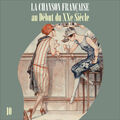
Real name Aimée Médebielle, also known as Emma Liébel, the pioneer of chanson réaliste was born in Pau on September 13, 1873. The daughter of a carpenter, she made a name for herself under her stage name in Toulouse as early as 1900, before finding a large audience ten years later in Paris, at Bobino and the Étoile Palace. She performed at many other venues, including the Zenith, the Européen (with Pierre Dac in 1924) and the Eldorado, until her retirement from the stage due to tuberculosis in 1926. She sang at the Kursaal in Algiers in 1912, attracting audiences until after the Second World War, and in 1919 presented a young artist named Lucienne Boyer at the Zénith. During this successful period, Emma Liébel left posterity some 200 recordings of her repertoire, including "Bonsoir m'amour" (1911), Lucien Boyer's "Les Goélands" (1913), "La Coco" (1916), later covered by Fréhel, "La Violetera" (1920), a cover of a Spanish aria, "Ma chanson" (1923) and "Pars " (1924), a hit for Yvonne George. Emma Liébel may not have created the realist genre, but she paved the way for a line of female singers such as Fréhel, Damia and Édith Piaf. The performer nicknamed the "Queen of the phono" or the "Queen of realistic song" ended her career with a three-month run at L'Européen in 1925. Suffering from phthisis, she opened a café-cabaret in her region, before dying in Boeil-Bezing on January 30, 1928, at the age of 54.



![The French Song / Chronique De La Chanson Française [1925], Volume 2](https://cdn-images.dzcdn.net/images/cover/b7e49f216abf1dcbd5740dd301734fa5/120x120-000000-80-0-0.jpg)