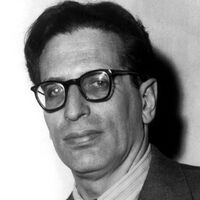
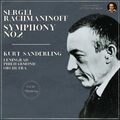
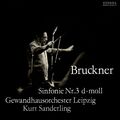
Kurt Sanderling was a highly acclaimed German conductor who, because of his Jewish background, was forced to leave his job as rehearsal director with the Deutsche Oper Berlin in 1936 when the Nazi Party came to power in Germany. He left for the Soviet Union where he worked with the Moscow Radio Symphony Orchestra before becoming conductor of the Kharkiv Symphony Orchestra. During the hostilities he remained in Russia and following the siege of Leningrad he became the joint principal conductor of the Leningrad Philharmonic. It was during this period that Sanderling met the famous Russian composer and pianist Dmitri Shostakovich and this marked the start of a long personal friendship and a successful professional relationship.
Sanderling eventually returned to East Germany in 1960 where he became the conductor of the Berlin Symphony Orchestra, a post he held for 17 years. In 1972 he made his first guest appearance with London's Philharmonia Orchestra which led to a close association with the orchestra and some memorable recordings of Beethoven's symphonies for EMI. Sanderling retired in 2002 and was awarded a CBE for his services to music. He passed away in 2011, the day before his 99th birthday.