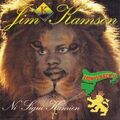
Kamagate Issouf grew up in the Kamagaya district of Bondoukou, a town in northeastern Côte d'Ivoire. Arriving in Abidjan at the age of 14, he trained as a dancer and was gradually introduced to music. Taking the stage name Jim Kamson, he embarked on a musical career in 1989, recording the album Djakabo. Released in 1989, this first album was a commercial success, selling 80,000 copies, boosted by the hit "Yileba". The artist deals with major social issues - war, hunger, peace - and combines Ivorian yagba and calypso to renew the Jamaican reggae aesthetic. The singer followed this up with Wayereho (1991) and Africa (1995), albums that brought him international recognition and tours abroad, including in Washington and Philadelphia in the United States. After concert-related travels, including a date in Paris in 1996, Jim Kamson settled in the United States for a while before returning to Abidjan, where he unveiled a fourth album, Bêrê Bêrê. After strong productivity in the early 2000s (including three albums between 2001 and 2005), Jim Kamson took a break before returning to songwriting in 2019 with Lion is Back for Revolution Time, an eighth album celebrating 30 years of a singular career in Ivorian reggae.