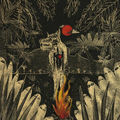
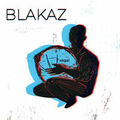
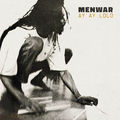
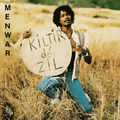
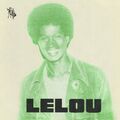
Singer and percussionist Stéphano Honoré was born in Port-Louis, Mauritius, on October 21, 1955. Born in the poor neighborhoods of the Mauritian capital, he took on a series of odd jobs at an early age, all the while teaching himself to play music. He made his first banjo from a tin of shoe polish, a stick and a nylon string. By 1973, Menwar (which means black hand) had recorded a few 45s. After a stint in an activist band, he made a name for himself with the singles "Ça va la vie " and "Capito " in 1977, under the name Lélou. His songs resonated with the poorest of the poor, the Creoles who, like him, live in precarious situations. He defines himself as " the man who shouts through the people ". In 1980, he released his first self-produced cassette, Souvenir le port, where he found his acoustic style. In 1982, he took up the ravanne, the symbolic drum of sega. He took his drum to Reunion Island for several years, where he met such maloya greats as Danyèl Waro, with whom he went on to perform. He took part in the Africolor festival in 1992, and composed the music for the musical "Mokko " in Marseille in 1995. He opened a ravanne school in Mauritius. In 1998, he released his first real CD, Pop Lékonomi. He found his style, acoustic and danceable, blending the drums of sega with funk and blues rhythms, inspired by James Brown, whom he had listened to as a child. He toured Africa, Europe and the islands (including the Sakifo festival on Reunion Island) with his second album Léko Rivyèr Nwar (2002). With Ay ay lolo, released in 2006, he was invited to perform at the Festival International de Jazz de Montréal. He is considered a master of sega drumming. In 2020, he and three other musicians formed the group Tiombô, where sega, maloya and two modern-day griots meet.