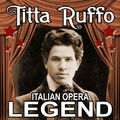
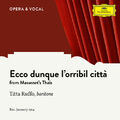
Titta Ruffo was an Italian operatic baritone who was born in 1877. He achieved early professional recognition after his debut as the Herald in Richard Wagner’s Lohengrin (1898) at the Teatro Costanzi in Rome. Ruffo is famous for his powerful, resonant voice and vibrant upper register, earning the nickname “Voce del leone” (“voice of the lion”). His international career included major debuts in London (1903), Milan (1904), and the Paris Opéra (1911). He made an American debut in Philadelphia in 1912 and performed at the Metropolitan Opera between 1922 and 1929. His repertoire included the title roles in Hamlet and Rigoletto, as well as Amonasro in Aida. Ruffo was a prolific recording artist who produced over 130 records, including the notable duet “Sì, pel ciel marmoreo giuro!” (1914) with Enrico Caruso. Following his retirement in 1931, he returned to Italy where he was arrested in 1937 for opposing the Fascist regime. He died in 1953.
| Italian Opera Legend |
|
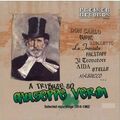
A Tribute to Giuseppe Verdi
|
|
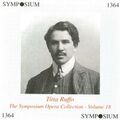
The Symposium Opera Collection, Vol. 18 (1906-1927)
|
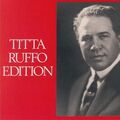
| Titta Ruffo Edition |
|
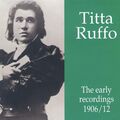
Titta Ruffo - The early recordings 1906 - 1912
|
|
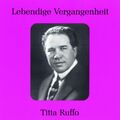
Lebendige Vergangenheit - Titta Ruffo
|
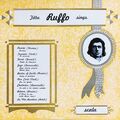
| Great Voices Of The Century |
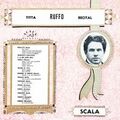
| Recital |
|
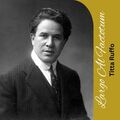
Largo Al Factotum
|
|
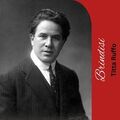
Brindisi
|
|
Massenet: Thaïs: Ecco dunque l'orribil città
|
|
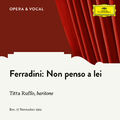
Ferradini: "Non penso a lei"
|
|
Leoncavallo: Zazà: Zazà, piccola zingara
|
|
Rossini: Largo al factotum
|
|
Tosti: Marechiare
|