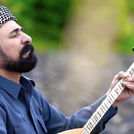
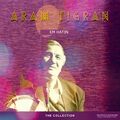
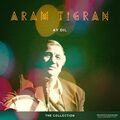
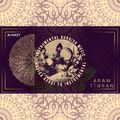
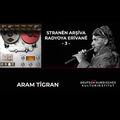
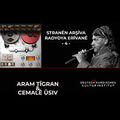
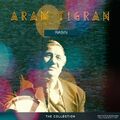
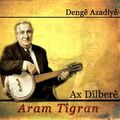
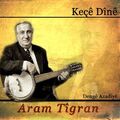
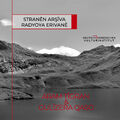
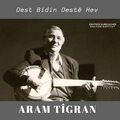
Born Aram Melikyan in Qamishli, Syria, on January 15, 1934, Aram Tigran or Aramê Dîkran (Kurdish translation of Armenian) was a Syrian-Armenian singer and musician who sang mainly in the Kurdish language. Also known by the Assyrian name Aram Dikran, he grew up in an Armenian family originally from Diyarbakır. He received his first oud from his uncle at the age of six. After completing his studies, he turned to music and continued to learn oud technique, giving his first public concert in 1953, during the Newroz celebrations, which gave its title to one of his first albums. By the age of twenty, he was singing in four languages: Kurdish, Arabic, Assyrian and Armenian. In 1966, he moved to Yerevan, Armenia, then part of the Soviet Union, where he was employed for eighteen years at Radio Yerevan. He left Armenia in 1995 and settled in Athens. Considered one of the finest contemporary Kurdish singers and musicians, Aram Tigrand has recorded 230 songs in Kurdish, 150 in Arabic, 10 in Syriac and 8 in Greek. In 2009, he was able to visit the villages where his parents grew up in the Ottoman Empire (now Turkey), where he was welcomed in Diyarbakır and gave a concert at the Newroz celebrations in Batman. Having died in Athens on August 8, 2009 at the age of 75, Tigran wanted to be buried in Diyarbakır, Turkey, a goal supported by the pro-Kurdish Democratic Society Party (DTP), but the Turkish Ministry of Interior refused this request, on the grounds that he was not a Turkish citizen. Instead, he was buried in Brussels, in the Jette cemetery, and soil from Diyarbakır was poured into his grave. Aram Tigran recorded numerous albums and his best-known songs are collected in the compilations Kurdistane / Şev Çû (2004), Gelê Kurd Dest Bidin Deste Hev (2009) and Stranên Arşîva Radyoya Erîvanê-3 (2020).