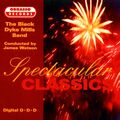
The award-winning Black Dyke Mills band – also called The Black Dyke Band – is one of the longest running brass bands in the world with roots dating back to 1816. Those very early origins began when Peter Wharton formed a brass and reed band that featured French horn player John Foster. That ensemble folded a short time later but 17 years later, Foster formed the Queenshead Band featuring members of Wharton’s old group. This version of the group struggled for several decades before being resurrected in 1855. They changed their name to The Black Dyke Mills Band and, with most of the members lived in Queensbury, England and worked at the mill. The band has remained active ever since and continue to rehearse in the same rooms as the original formation of the group. The Black Dyke Band’s recorded legacy dates back to 1904 when they were one of the first brass to make a recording. While a majority of their own 350+ recordings focus on classical music, they made a significant impact in pop culture when they released the single “Thingumybob” – a Lennon and McCartney composition – on Apple Records. The ensemble would eventually release a total of four singles for the label. They worked with McCartney again a decade later, appearing on the Wings album Back to the Egg in 1979. The Black Dyke Band would eventually work on pop albums by artists such as Tori Amos, The Beautiful South, Peter Gabriel, and many others. Their own catalog of recordings includes Carnival of Venice (1966), The Virtuoso Band (1967), Black Dyke in Concert (1969), Triumphant Brass (1972), The Lion & the Eagle (1977), Life Divine (1985), Blitz (1992), Holst: The Planets (1997), Ground Force (1999), and Lloyd: Works for Brass (2024). Over the course of their career, The Black Dyke Band has won many awards including numerous wins at the English National Championships, the National Brass Band Championships, and more.