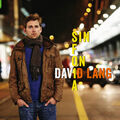
Growing up in Los Angeles in the 1960s, David Lang had no history of music in his family and no great mastery of any instrument, but was inspired one stormy day at school when his class weren't able to go out to play at break time. Instead, they were kept inside and shown a film of a Leonard Bernstein concert at Carnegie Hall. The nine-year-old Lang immediately started borrowing instruments, listening obsessively to Beethoven and Shostakovich records and creating his own compositions. By the age of 13 he was studying under the UCLA Head of Composition Henri Lazarof, before continuing his musical education at Stanford University, the University of Iowa and Yale. His minimal, sparse but highly emotional trademark sound gained recognition in the late-1980s when he united with fellow composers Michael Gordon and Julia Wolfe to form the Bang On A Can collective and staged marathon 12-hour concerts of experimental, classical music. He also created compositions for ballets and modern dance productions and wrote the 1999 mini opera The Difficulty Of Crossing The Field with the Kronos Quartet performing his soundtrack. Scores for Hollywood movies Requiem For A Dream and (Untitled) attracted a wider audience, but it was his album The Little Match Girl Passion that drew most acclaim. Based on a Hans Christian Andersen story, it premiered at Carnegie Hall in 2007 and won the Pulitzer Prize for Music thanks to its juxtaposition of horror and elegant drama. Other acclaimed works include his 2009 solo album Pierced and 2013's Death Speaks - which featured collaborations with rock musicians Owen Pallet and The National's Bryce Dessner - and his soundtrack to Paolo Sorrentino's 2015 film Youth, which included the Academy Award-nominated track Simple Song #3.