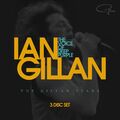
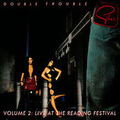
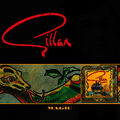
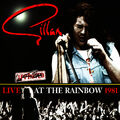
Gillan was the vehicle for singer Ian Gillan, between the post-Deep Purple Ian Gillan Band and his foray into Black Sabbath before his solo career. Comprising guitarist Steve Byrd, Colin Towns on keyboards, John McCoy on bass and Liam Genockey on drums (replaced by Pete Barnacle), Gillan was born in 1978 and broke away from the jazz/rock fusion of the Ian Gillan Band to return to the hard rock of the first album of the same name, released in Japan on the Eastworld label. Reissued in 1994 as The Japanese Album, it was followed by Mr. Universe (1979), with Bernie Tormé and Mick Underwood replacing Steve Byrd and Barnacle. Rated #11 in the U.K., Mr. Universe aroused interest among old and new Ian Gillan fans, who raved about its successor Glory Road (1980, rated #3) and its hit "Sleeping on the Job". After another chart-topping single, "Trouble " (no. 14), Gillan tapped into the new wave of British heavy metal (NWOBHM) with Future Shock (1981, no. 2), which included "New Orleans" (no. 17) and "No Laughing in Heaven" (no. 31). Popular in Britain and Japan, Gillan was unable to break through in the U.S. and underwent further changes with the replacement of Tormé by Janick Gers (ex-White Spirit and future Iron Maiden), for the album Double Trouble (1981, No. 12). A final studio album, Magic, followed in 1982, before the break-up and a succession of live recordings and compilations, including the Gillan 1978-1982 retrospective, released in 2025.