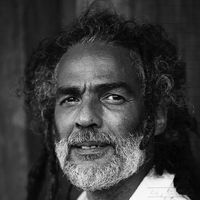
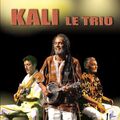
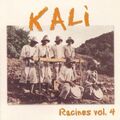
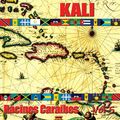
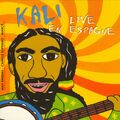
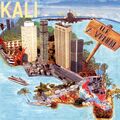
Jean-Marc Monnerville, better known as Kali, was born in Fort-de-France on February 21, 1956. Although his family included Gaston Monnerville, a former French parliamentarian, Jean-Marc was drawn to music by his father, a musician with the African Band in Paris. After arriving in France to study music, Kali, a nickname he chose in homage to the cartoon Calimero, turned to percussion and joined several bands. Fascinated by the Rastafari movement, he preferred reggae to zouk, the predominant genre in the West Indies at the time. When dissension led him to break away from the groups in which he played, Gaoule and 6ème Continent, Kali escaped on his own and returned to his homeland. He composed his first two albums, Racine 1 (1989) and Racine 2 (1990), featuring banjo, percussion and synthesizers, and made a name for himself on the West Indian music scene, adding the distinctive sounds of Creole music to reggae. This distinction led him to perform internationally at the Eurovision Song Contest in 1992, with the track "Monté La Riviè ", released on the album Roots that same year. Although he came eighth in the contest, the show brought him wider recognition. Committed in his lyrics, his vision of West Indian society is expressed in his albums, such as Débranché (1995), and on stage, where he took part in the centenary of the first anti-colonial uprising in Zimbabwe in 1996. After Racines Vol. 3 (1996), he won the 1997 Sacem Martinique award for best song of the year with "La Biguine Des Enfants Du Bon Dieu". He made a musical return to the West Indian cultural tradition with the fourth volume of Racines, published in 2001, then concluded the series in 2007 with Racines Vol. 5, after having worked to promote Martinique's cultural heritage and helped educate the island's young schoolchildren.